
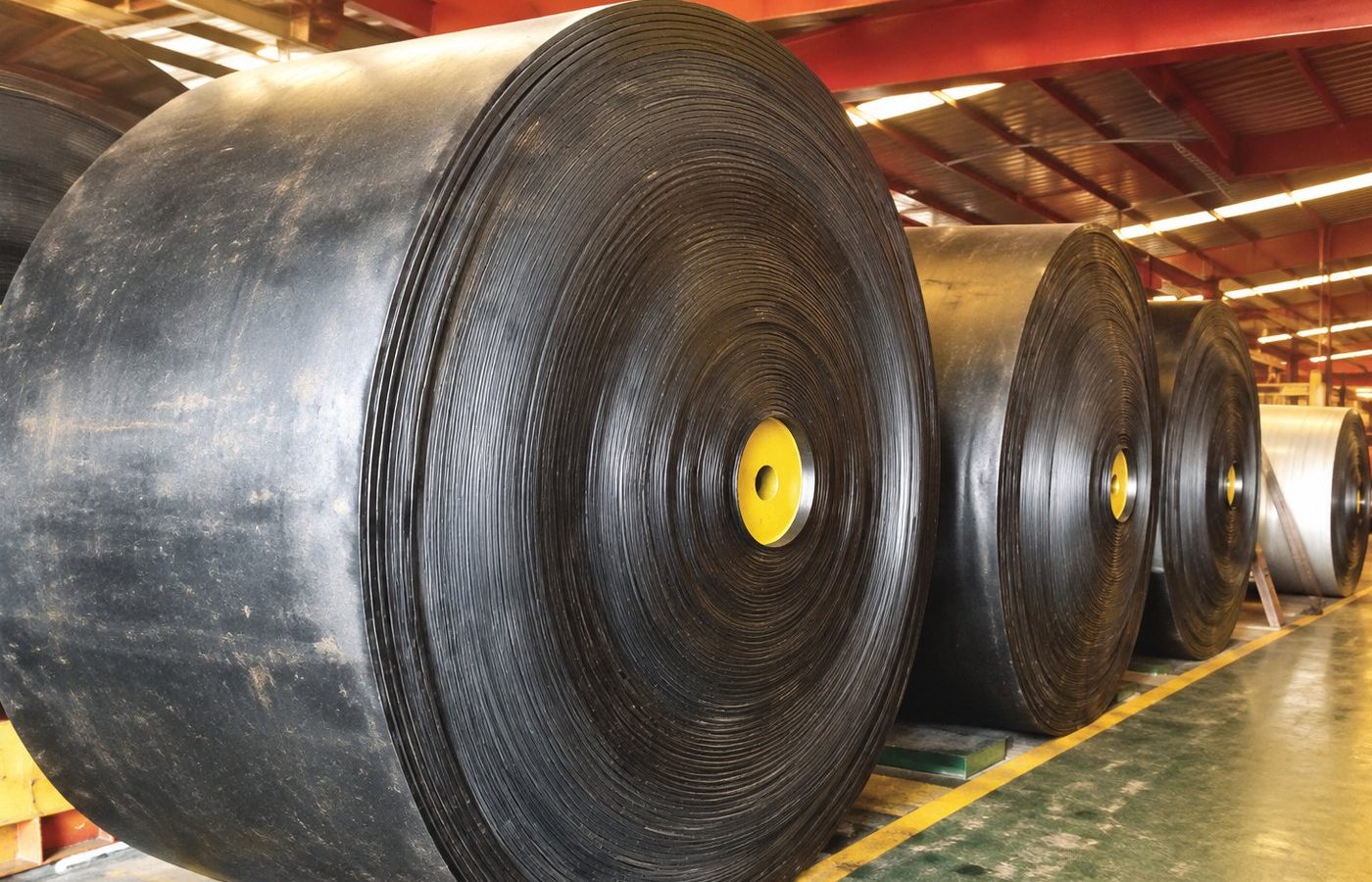
Belt core selection
- Nylon (NN) core: high strength, good elasticity, impact resistant, suitable for high-speed, medium-long distance, high-impact transport.
- Polyester (EP): wear resistant, chemical resistant, -20°C to +120°C normal operation, stable performance in humid environments.
- Steel cord core: long distance, high strength, large capacity, minimal elongation, short tensioning travel.
Cover rubber selection
- Heat resistant: material or environment temperature exceeds 60°C, such as sintering plants, coking plants, cement plants, foundries.
- Burn resistant: high-temperature material direct contact, surface forms carbonized layer for thermal insulation.
- Oil resistant: transport oil-containing materials, cover rubber uses nitrile rubber.
- Cold resistant: minimum working temperature -40°C.
High-angle transport
When slope exceeds normal belt capacity, use corrugated sidewall belt for continuous transport at 0-90° any angle; small-angle bagged or granular materials can use patterned belt.
When ordering, specify belt width, ply number, top and bottom cover rubber thickness and length, for example: CC56 conveyor belt, belt width 800, 6-ply canvas, top rubber 4.5mm, bottom rubber 1.5mm, 100 m.