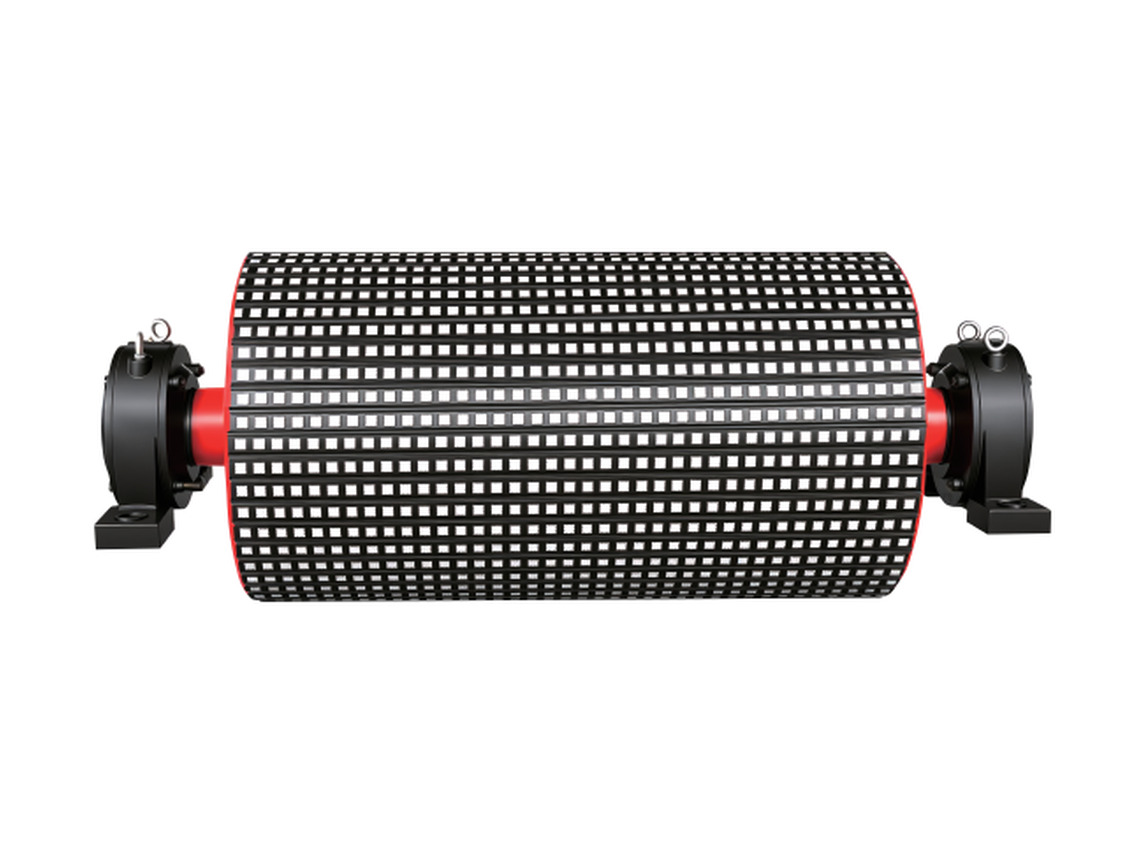
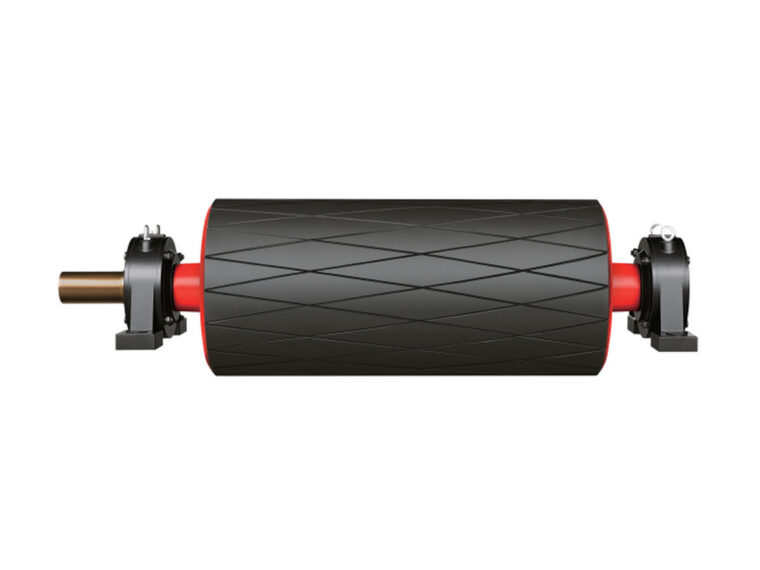
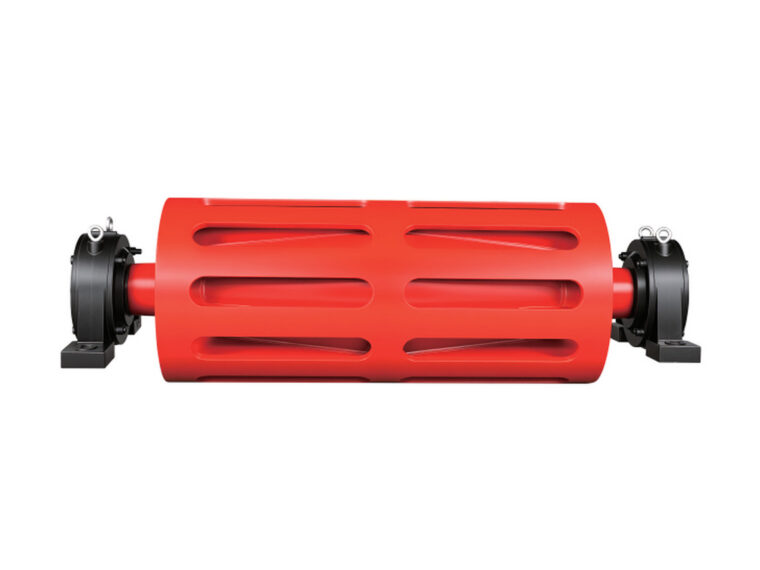
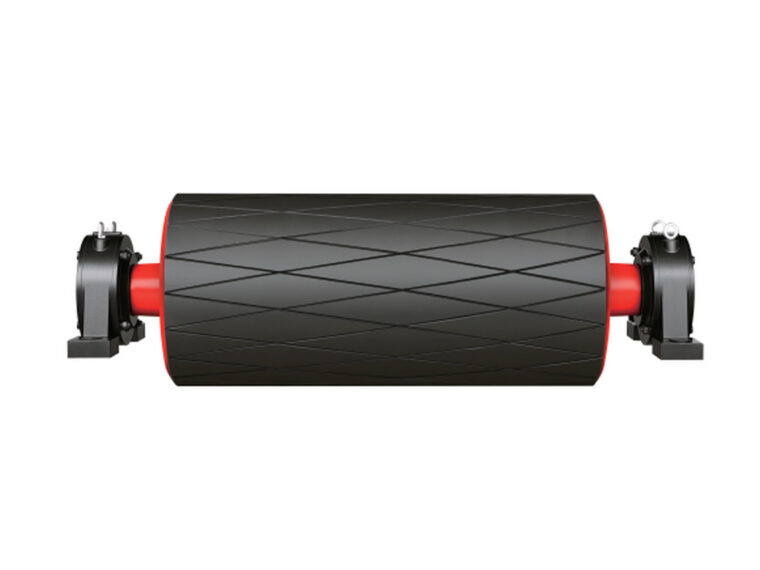
Ceramic lagging sets high-alumina tiles into a high-elastic rubber matrix and hot-vulcanizes the assembly to the shell. The rubber keeps the tiles compliant against the belt; the tiles supply the grip and take the abrasion.
Dimpled tiles bite through the water film on a wet belt, which is why ceramic lagging is the standard answer to drive-pulley slip in wet, muddy or washdown service. Smooth tiles are used where belt cover wear is the greater concern.
Shells are Q235 or Q355 carbon steel, or stainless steel for corrosive duty. Tell us whether the pulley is driving or non-driving and how wet the conveyor runs — dimpled ceramic on a non-drive pulley can wear the belt for no benefit.
Specifications
| Material |
Carbon Steel (Q235 / Q355) or Stainless Steel |
| Specifications |
Customizable |
| Surface treatment |
Hot vulcanizing high-alumina ceramic tiles (with or without dimples) into a high-elastic rubber matrix to create a high-friction, wear-resistant lagging layer |
| Minimum order quantity |
8 pcs |